

Reverse osmosis membranes are designed to remove dissolved contaminants, not protect themselves from poor feed water quality. Learn why effective pre-treatment is essential for improving performance, extending membrane life and reducing operating costs.
Key Takeaways
- Pre-treatment protects RO membranes from fouling, scaling and chemical damage.
- The right water filtration process improves efficiency, reliability and membrane lifespan.
- UF pre-treatment (Ultrafiltration) provides consistent removal of suspended solids and microorganisms before RO.
- Coagulation and flocculation improve upstream contaminant removal and support downstream filtration.
- Skipping pre-treatment increases downtime, maintenance costs and the risk of premature membrane failure.
Reverse osmosis (RO) is one of the most effective technologies available for producing high-quality water. If you’d like to understand how RO works, what it removes and where it’s best applied, we’ve covered that in our guide to reverse osmosis. This article focuses on the equally important stage that comes before it: pre-treatment.
The membranes inside an RO plant are designed to separate dissolved contaminants from water. They’re also one of the most valuable and sensitive components in the entire treatment process. If suspended solids, scaling compounds, organic matter or incompatible chemicals reach the membranes, performance can decline rapidly, operating costs increase and membrane life can be significantly shortened.
That’s why pre-treatment isn’t an optional extra. It’s a critical part of the water filtration process that protects the RO plant, improves efficiency and helps maintain consistent water quality.
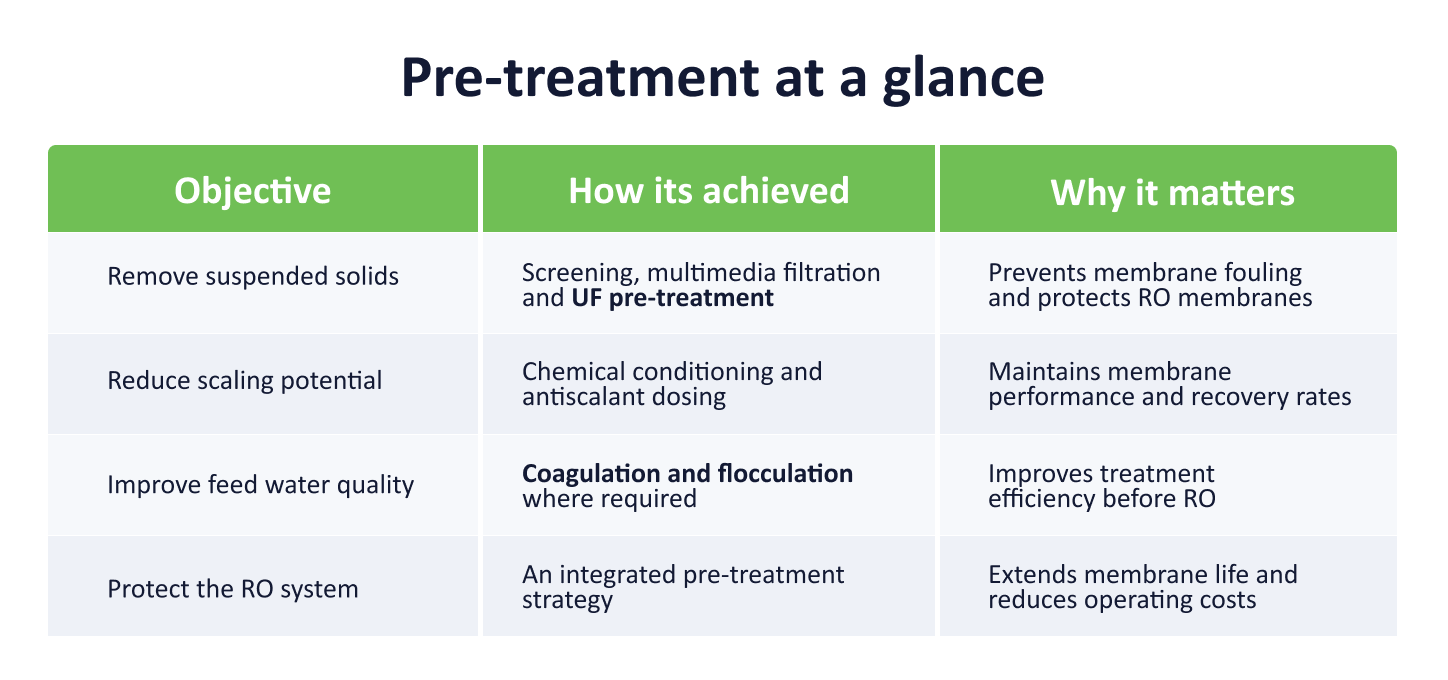
Why is pre-treatment required for RO?
Pre-treatment prepares feed water so the RO membranes can operate under stable, controlled conditions.
Raw water can contain a wide range of contaminants depending on its source. Surface water, groundwater, municipal supplies and seawater all present different treatment challenges, meaning there’s no universal pre-treatment solution.
A well-designed pre-treatment process aims to:
- Remove suspended solids before they reach the membranes
- Reduce turbidity
- Prevent membrane fouling
- Minimise scale formation
- Remove or neutralise chemicals that could damage membrane materials
- Improve overall system reliability and recovery rates
Without these steps, the membranes have to perform work they were never designed to do.
Instead of efficiently removing dissolved salts, they quickly become clogged or damaged, requiring more frequent cleaning and replacement.
The pre-treatment stage of the water filtration process
Effective pre-treatment usually combines several technologies rather than relying on a single process.
The right combination depends on the feed water quality, production requirements and final water specification.
Physical filtration
The first stage focuses on removing suspended material before it reaches the RO membranes.
Depending on the application, this may include:
- Screening
- Multimedia filtration
- Cartridge filtration
- UF pre-treatment (ultrafiltration)
Of these, UF pre-treatment has become increasingly common because it provides a consistent physical barrier capable of removing fine suspended solids, colloidal particles and many microorganisms before they enter the RO plant.
For challenging water sources, ultrafiltration provides a more stable feed water quality, helping reduce membrane fouling and improving overall plant performance.
Chemical conditioning
Physical filtration alone isn’t always enough.
Many dissolved compounds remain in solution and can create problems once pressure is applied across the RO membranes.
Chemical pre-treatment is therefore used to condition the water before it enters the system.
Depending on the feed water, this may include:
- pH adjustment
- Antiscalant dosing
- Dechlorination where chlorine-sensitive membranes are used
- Oxidation or reduction processes where required
Coagulation and flocculation are commonly used upstream of RO systems where fine suspended particles and organic matter need to be removed before downstream filtration. By encouraging these particles to combine into larger flocs, they can be removed more effectively before the water reaches downstream filtration equipment.
The objective isn’t simply to treat the water. It’s to create stable operating conditions that allow the RO plant to perform efficiently over the long term.
What happens if pre-treatment is skipped?
The consequences of inadequate pre-treatment often don’t appear immediately.
An RO plant may initially perform as expected before gradual performance losses begin to develop. Over time, contaminants accumulate, membrane performance declines and operating costs begin to rise.
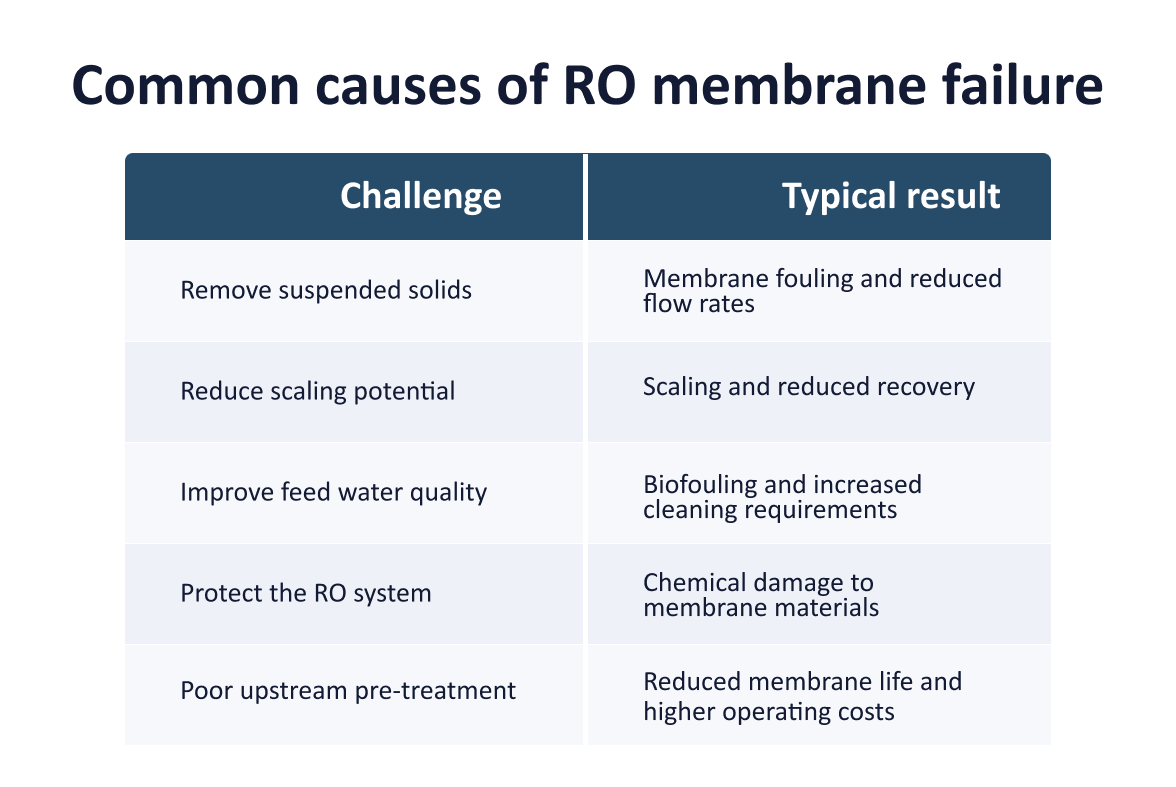
Membrane fouling
Suspended solids, organic material and biological growth accumulate on the membrane surface, reducing flow rates and increasing operating pressure.
Scaling
Minerals such as calcium carbonate and calcium sulphate can precipitate onto the membrane surface, restricting water flow and reducing recovery.
Chemical damage
Exposure to incompatible chemicals, particularly oxidising agents like chlorine, can permanently damage certain membrane materials.
Increased operating costs
As membrane performance declines, plants require more frequent cleaning, consume more energy and operate less efficiently.
Shorter membrane life
RO membranes represent a significant capital investment. Poor pre-treatment often results in premature replacement, increasing lifecycle costs.
Unplanned downtime
Cleaning, troubleshooting and membrane replacement all reduce plant availability and can interrupt production where reliable water supply is essential.
These issues are often interconnected. Fouling increases energy consumption, scaling accelerates membrane wear and repeated cleaning gradually shortens membrane life.
The result is higher operating costs, reduced plant reliability and avoidable disruption to operations.
Why pre-treatment should never be treated as an afterthought
It’s tempting to focus attention on the RO plant itself because that’s where the desalination or purification takes place.
In reality, the performance of the entire system is determined long before water reaches the membranes.
A well-designed pre-treatment process:
- Protects valuable membrane assets
- Maintains consistent water quality
- Reduces cleaning frequency
- Improves recovery rates
- Extends membrane lifespan
- Minimises operational risk
- Lowers long-term operating costs
Rather than adding unnecessary complexity, effective pre-treatment creates a more stable, predictable and efficient RO operation.
Choosing the right pre-treatment solution
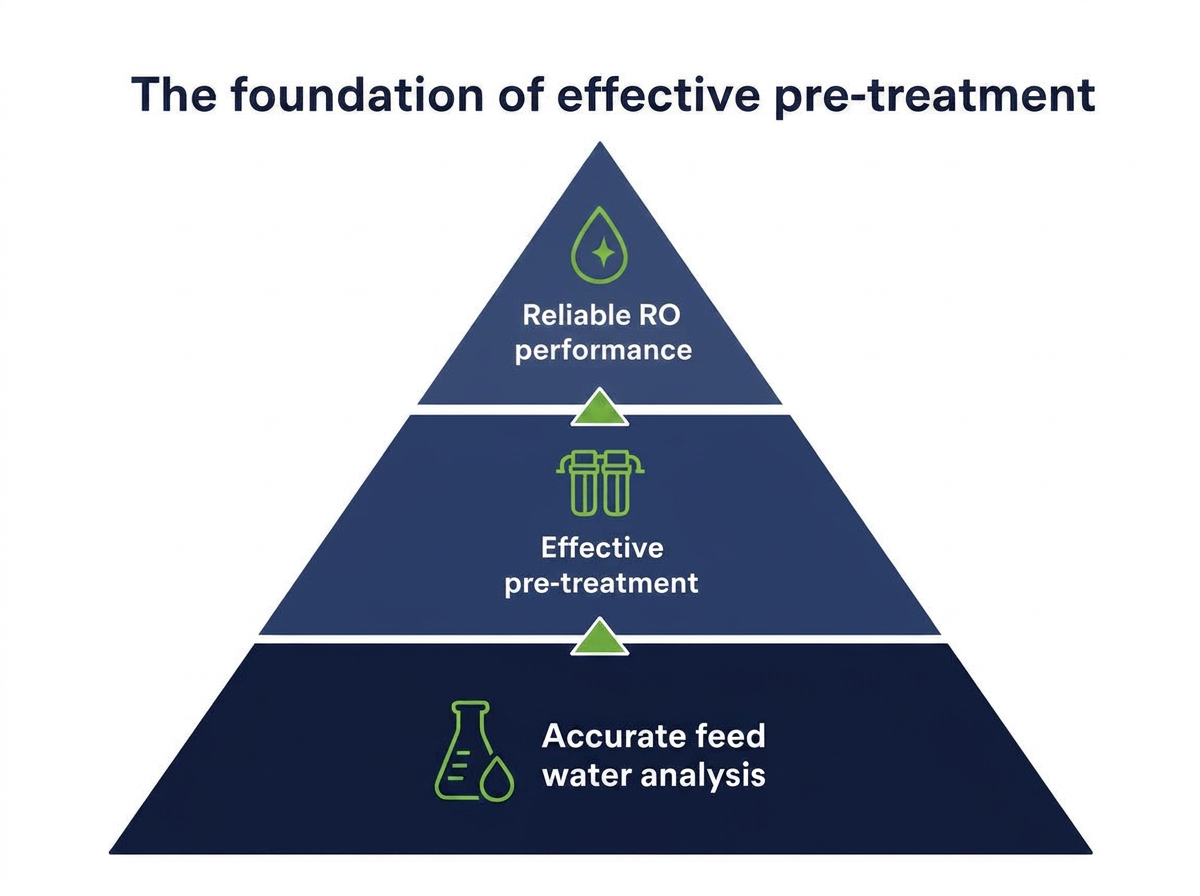
An effective treatment solution starts from the bottom up.
Accurate feed water analysis provides the foundation for selecting the right pre-treatment technologies. Effective pre-treatment then protects membrane performance, helping the RO plant operate reliably and efficiently over the long term.
At WEC, we design and deliver complete treatment solutions, from pre-treatment through to reverse osmosis and desalination. By considering the entire treatment process rather than individual technologies in isolation, we help clients develop reliable, efficient plants that are designed around their water quality, operational requirements and long-term performance goals.
There’s no standard pre-treatment design that suits every RO application.
This is why a feed water analysis is typically one of the first steps in designing an effective pre-treatment process. Understanding the composition of the source water helps determine which technologies will provide the most reliable and cost-effective long-term performance.
The right approach depends on several factors, including:
- Feed water source and quality
- Required treated water quality
- Plant capacity
- Recovery targets
- Operational constraints
- Long-term operating costs
This is why successful RO projects begin with understanding the water itself before selecting treatment technologies.
Whether the solution requires screening, coagulation and flocculation, UF pre-treatment, chemical conditioning, reverse osmosis or a combination of technologies, designing the process as an integrated whole helps deliver more reliable, efficient long-term performance.
Talk to our team about designing the right pre-treatment solution for your RO or desalination plant.
FAQs:
Why is pre-treatment required for RO?
Pre-treatment removes suspended solids, organic matter and scaling compounds before water reaches the RO membranes. This protects membrane performance, improves efficiency and extends equipment life.
What systems protect RO membranes?
RO membranes are typically protected using a combination of physical filtration, UF pre-treatment, chemical conditioning, cartridge filtration and, where required, coagulation and flocculation.
What happens if pre-treatment is skipped?
Without effective pre-treatment, RO membranes can foul, scale or suffer chemical damage. This increases energy consumption, cleaning frequency, downtime and membrane replacement costs.
What pre-treatment technologies work best?
The best pre-treatment solution depends on the feed water quality and treatment objectives. Common technologies include multimedia filtration, ultrafiltration, coagulation and flocculation, cartridge filtration, pH adjustment and antiscalant dosing.
Is UF pre-treatment always necessary?
Not always. UF pre-treatment is particularly valuable for challenging feed waters with high suspended solids or microbiological content, but the appropriate solution depends on the specific water quality and plant requirements.
